
What Organic Means on a Clothing Label
…And What It Doesn’t
Bill Morris
5/16/20264 min read
The word organic is one of the most asymmetric terms in consumer goods regulation. On a food label, the word carries the weight of the USDA National Organic Program — a federal regulatory framework with mandatory certification, third-party verification, and legal consequences for misuse. On a clothing label, the same word is governed by nothing comparable. Any brand can print it without certification, without verification, and without legal consequence.
This is not a regulatory loophole that needs closing. It is the legal default in the United States. The consumer who has spent a decade learning to trust the word organic on food packaging carries that trust into apparel purchasing, where it is not earned by anything other than marketing convention.
The Word Without a Standard
The Federal Trade Commission’s Textile Fiber Products Identification Act governs how fiber content can be disclosed on care labels. It requires accurate percentages and proper fiber identification. It does not govern marketing claims about how those fibers were grown or processed. The word organic, the word sustainable, the phrase made with natural materials — all of these can appear on hangtags, product pages, and brand marketing without any regulatory standard determining what they mean.
A brand can source conventional cotton, dye it with conventional chemistry, manufacture the garment in a facility with no environmental or labor certifications, and print the word organic on the hangtag. The garment is misrepresented. There is no consequence.
This is not theoretical. It is standard practice across a significant portion of the apparel market.
The Certifications That Mean Something
In the absence of regulatory standardization, third-party certifications carry the burden of verification. Three are worth recognizing on a clothing label.
GOTS, the Global Organic Textile Standard, is the most rigorous textile certification available globally. The standard requires a minimum of 95 percent certified organic fiber content for the organic label grade and 70 percent for the made with organic grade. GOTS also covers the entire processing chain from farm to finished garment. It prohibits heavy metals, PFAS, formaldehyde-based finishing chemistry, azo dyes that cleave into carcinogenic compounds, and most synthetic finishing agents. It requires verified labor conditions at every stage. It is the most comprehensive textile certification standard in commercial use.
OEKO-TEX Standard 100 is a complementary certification that tests finished garments for harmful substance limits across over 100 chemical parameters. It does not address fiber sourcing or supply chain conditions. It addresses what the finished product contains by the time it reaches the consumer. A garment can be OEKO-TEX certified without being organic. The two certifications cover different concerns and work best in combination.
OCS, the Organic Content Standard, verifies that a finished product contains the accurately stated amount of organically grown material. It is a chain-of-custody standard rather than a processing standard. OCS does not address what chemistry was used to convert the fiber into fabric.
Where the Certification Has to Appear
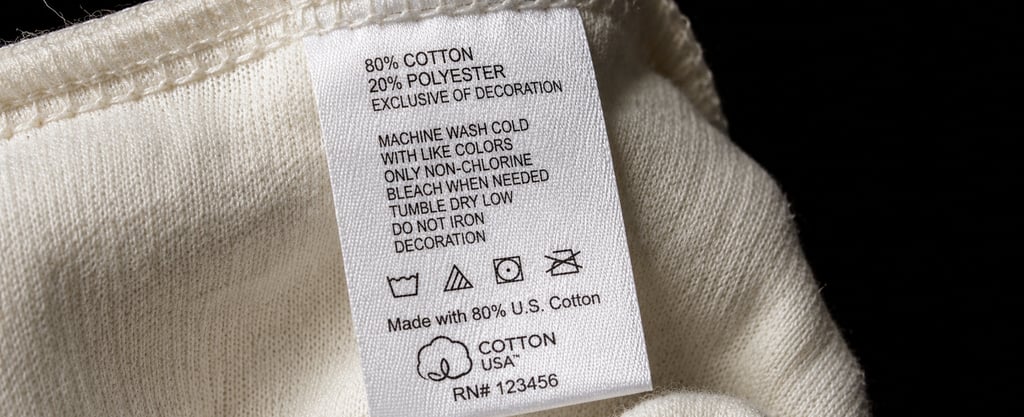
The certification has to appear on the physical care label sewn into the garment, not just on the hangtag or the brand’s marketing materials. The hangtag is a marketing document. The care label is governed by federal law. A certification claim on the hangtag without corresponding evidence on the physical label is not verifiable.
GOTS certification includes a certifier’s name and a license number. Both should be present on the physical label. The license number can be verified against the GOTS public database. If a brand carries genuine GOTS certification, the verification mechanism is straightforward.
OEKO-TEX similarly issues certifications with a traceable license number that can be verified through the official OEKO-TEX Buying Guide.
The absence of these verification details does not mean the brand is lying. It means the claim is unverified by any mechanism the consumer can independently check.
The Price Point Trap
The most common consumer assumption in this category is that price correlates with certification status. A $200 organic cotton shirt seems more credible than a $20 one. This assumption is not reliable.
A mass-market brand can source GOTS-certified organic cotton, manufacture it in a fully compliant facility, achieve economies of scale that reduce unit cost, and sell the finished garment at a budget-friendly price point. The certification is identical to what a premium brand might carry. The verification mechanism is the same.
Conversely, a premium brand can print the word organic on the hangtag of a conventional cotton garment with no certification anywhere on the physical label. The price signals nothing about the actual sourcing or processing chemistry.
The label is the only document on the garment that federal law requires to be accurate. The certification name on the physical label is the only signal that carries verification weight. Everything else is marketing.
What Organic Tells You and What It Doesn’t
GOTS-certified organic cotton tells you the fiber was grown without synthetic pesticides or GMOs, processed without a defined list of prohibited chemicals, dyed with colorants that meet environmental and toxicological criteria, and manufactured in a facility that meets verified social standards.
It does not tell you the fiber length, which determines whether the fabric will pill within months or hold its structure for years. It does not tell you whether the garment was treated with antimicrobial finishes that are technically GOTS-permitted but biologically active. It does not tell you what the synthetic fiber component contains if the certification grade is made with organic at 70 percent rather than the organic grade at 95 percent.
Organic on a clothing label, even when properly certified, is one data point. It is a meaningful data point. It is not the complete picture.
The Practical Test
Three questions cut through most of the noise.
First: Is there a third-party certification name on the physical care label? GOTS, OEKO-TEX Standard 100, and OCS are the three worth recognizing. The certifier’s name and license number should both be present.
Second: What is the certification grade? GOTS organic requires 95 percent organic content. GOTS made with organic requires 70 percent. The grade matters for understanding what fraction of the garment is actually covered.
Third: What is the full fiber content breakdown? Even a GOTS made with organic garment can contain up to 30 percent of non-organic fiber, including recycled polyester under current standards. The certification covers the organic component. The synthetic component carries its own biological profile.
The word organic on the hangtag is the beginning of an inquiry. The physical care label is where the answer actually lives.
Fabrics Vetted examines the biological interface between apparel and the human body. FabricsVetted.com
References
1. Global Organic Textile Standard. GOTS Version 7.0. global-standard.org.
2. OEKO-TEX Association. OEKO-TEX Standard 100. oeko-tex.com.
3. Organic Content Standard. Textile Exchange. textileexchange.org.
4. US Federal Trade Commission. Textile Fiber Products Identification Act. ftc.gov.
5. USDA National Organic Program. ams.usda.gov.
6. GOTS label grades: 95% minimum for organic, 70% minimum for made with organic. theroundup.org, 2026.
Contact
Reach out for questions or collaborations
© 2026. All rights reserved.