The Death of Sustainable Fashion as a Marketing Category
The premium sustainable fashion brand is dying. Not slowing down. Not pivoting. Dying as a consumer category.
Bill Morris
5/21/20265 min read
The Death of Sustainable Fashion as a Marketing Category
The premium sustainable fashion brand is dying. Not slowing down. Not pivoting. Dying as a consumer category.
In the past 18 months, the brands that defined this segment for over a decade have collapsed or been acquired at fractions of their former valuations. Allbirds went from a $4 billion public valuation in 2021 to a $39 million asset sale in early 2026. Everlane, once valued at over $1 billion, was acquired by Shein last week for $100 million. Outerknown is restructuring. Reformation continues to grow, but only by quietly removing the word sustainable from its marketing materials.
The pattern is consistent. The cause is not what most analysts are saying.
This is not a story about consumers no longer caring about how their clothing is made. It is a story about one company proving that the foundational assumption beneath the entire category was wrong.
The Assumption That Built the Category
For roughly 15 years, sustainable fashion as a consumer category was built on a single economic premise. Natural fibers cost more. Organic cotton, responsibly sourced wool, traceable linen, ethical cashmere — all of these required supply chain investments that conventional fast fashion would not absorb. The brands that built around these materials charged a premium and asked consumers to pay it.
The pitch was straightforward. Pay more, get better materials, support a cleaner supply chain. Allbirds priced its wool sneakers at $98 when comparable conventional sneakers retailed at $50. Everlane sold its iconic GOTS-certified t-shirts at $25 when fast fashion equivalents were $5. The premium was the entire business model.
For about a decade, this model worked. A specific consumer segment — typically college-educated, urban, mid-to-high income — absorbed the price difference in exchange for the values alignment. The brands grew. They raised venture capital. They went public.
Then the math changed.
The Company That Changed the Math
Quince is now a $4.5 billion brand. The company receives surprisingly little attention in the sustainable fashion conversation despite having done more to restructure the category than any brand in the last decade.
Quince's model is straightforward. The company operates direct-to-factory, eliminating traditional retail margins, brand markups, and wholesale distribution costs. The savings are passed through to material sourcing. The result is GOTS-certified organic cotton t-shirts at $19, washable silk blouses at $50, and 100% Mongolian cashmere sweaters at $50.
These price points were considered impossible. The conventional wisdom held that natural fibers required a price premium because the supply chain economics demanded it. Quince proved that the premium was not a function of the materials themselves. It was a function of the layers of distribution and brand markup that sat between the factory and the consumer.
Once those layers came out, the premium disappeared.
Once the premium disappeared, the premium brand had no reason to exist.
The Verification Question
Quince is not without its critics. The brand uses some GOTS-certified organic cotton and OEKO-TEX certified fabrics, but these certifications apply to only a fraction of the product line. Animal welfare verification is inconsistent. Carbon neutrality claims have not been independently confirmed. The model is direct-to-factory but the labor and environmental practices in those factories are not always transparent.
These are legitimate concerns. They are also separate from the economic shift Quince has triggered.
The point is not that Quince is a perfect sustainable brand. The point is that Quince demonstrated, at significant scale, that natural fibers can reach mass-market price points. That demonstration changed the entire economic logic of sustainable fashion as a consumer category. Other players in the market are now responding to that demonstration, not to anything Quince specifically did or did not certify.
The Shein Acquisition Is the Confirmation Signal
Shein's acquisition of Everlane last week is the clearest signal yet that the industry has internalized this shift.
The cover story circulating in fashion press is that Shein wanted a sustainability facelift by aligning itself with Everlane's credibility. That framing is partially accurate, but it misses the deeper mechanism. Shein cannot pivot to natural fibers in any meaningful timeframe. The company's manufacturing infrastructure is built on polyester production at massive scale, and that infrastructure does not redirect quickly toward organic cotton sourcing.
So rather than changing what they manufacture, Shein acquired a brand that already carried natural fiber credibility in the consumer mind. The Everlane acquisition is fast fashion's response to the Quince problem. The category is being acquired faster than it can be built organically.
This is also the signal that the premium sustainable brand era is over as a viable business model. If a brand worth over $1 billion at peak valuation cannot maintain itself as an independent business and gets acquired by the cheapest mass-market platform in the world, the category has structurally collapsed.
What Replaces It
Three predictions follow from this shift, each with practical implications for the consumer.
First, the premium sustainable fashion brand as a consumer category is functionally over. The remaining brands in this segment will either be acquired by larger players, pivot away from sustainability messaging, or quietly fail. Reformation's strategic shift toward style-first marketing rather than sustainability-first is the prototype for what survival looks like. The brands that try to maintain the original premium positioning will not survive the next economic cycle.
Second, natural fibers are positioned to flood the low end of the market within 18 to 24 months. Shein, Temu, H&M, Zara, and other fast fashion platforms will follow the Quince playbook because the consumer demand pattern is now visible at scale. Expect GOTS-certified organic cotton garments at $10 to $15 price points within two years. The infrastructure to support this is being built right now.
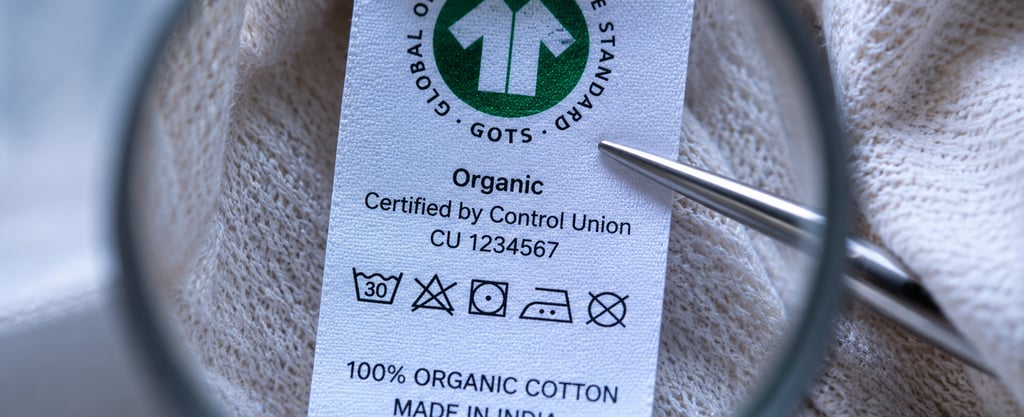
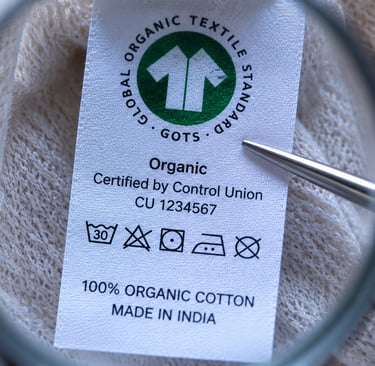
Third, third-party certifications matter significantly more than they did before. When every brand claims natural materials at every price point, the consumer needs an independent verification mechanism. GOTS, OEKO-TEX Standard 100, and OCS are the three that carry weight. The certification name and license number need to appear on the physical care label, not just the brand's marketing materials. Reading the label correctly becomes the single most important skill the consumer can develop over the next two years.
What This Means for the Reader
The instinct for most consumers reading this is to feel that something has been lost. The brands that championed sustainability for over a decade are disappearing, often through acquisitions that feel like betrayals of the original mission.
That instinct is understandable. It also misses what is actually happening.
The category is not dying because the values died. It is dying because the values are no longer scarce. When Quince demonstrated that natural fibers could reach mass-market price points, the moral premium that sustainable brands charged became economically obsolete. The natural fibers are still being made. They are just being sold at different price points by different brands with different marketing approaches.
What survives this transition is the consumer who knows how to verify the claims being made. Marketing language is about to become more diffuse, not less. Every brand will claim natural materials. The skill that separates a good purchase from a misleading one is no longer choosing the right brand. It is reading the right document.
The care label is the document. The certifications named on it are the verification mechanism. The dominant fiber listed first is the biological reality of what is touching your skin. None of that changes regardless of which brand sells it.
The premium sustainable fashion brand is dying. The information advantage of the educated consumer is just beginning.
Fabrics Vetted examines the biological interface between apparel and the human body. FabricsVetted.com
References
Bloomberg. E-Commerce Giant Shein Buys Apparel Brand Everlane. May 17, 2026.
Puck. Everlane Is Selling Out To Shein. May 17, 2026.
CNN Business. Everlane is the latest beloved Millennial brand selling out to stay alive. May 18, 2026.
TechCrunch. Allbirds agrees to sell assets and IP to American Exchange Group for $39 million. March 2026.
Business of Fashion. How Brands Are Taking On Quince. August 2025.
Ethos. Is Quince Sustainable or Just Fast Fashion In Disguise. March 2026.
Retail TouchPoints. Vuori Ramps up the Denim Wars with New Offerings. March 2026.
Global Organic Textile Standard. GOTS Version 8.0. March 2026. global-standard.org.
OEKO-TEX Association. OEKO-TEX Standard 100. oeko-tex.com.
Organic Content Standard. Textile Exchange. textileexchange.org.